Beyond "Please": Weaponizing 49 CFR § 371.3
Why polite emails get deleted, and regulatory demands get paid.
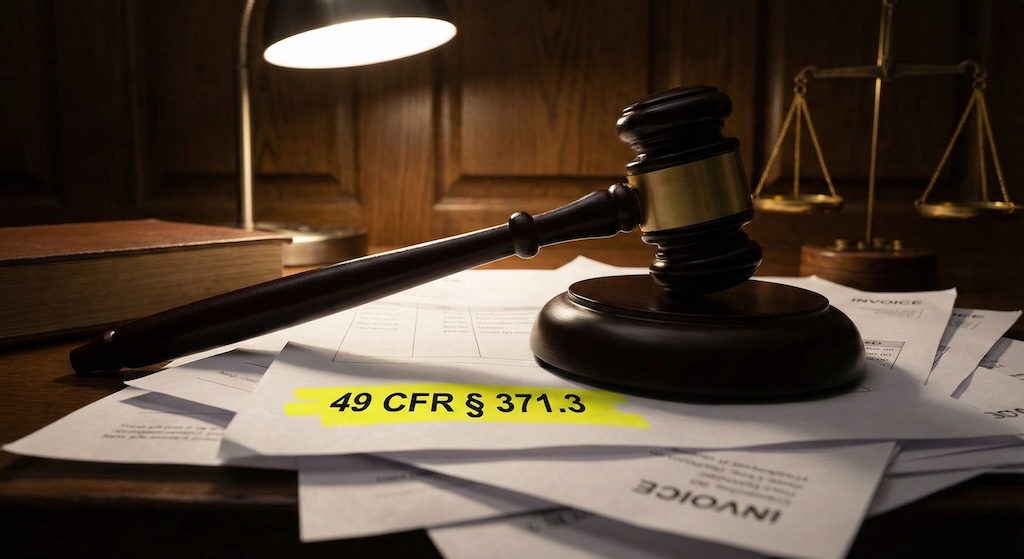
Most independent truckers operate on relationships. You want to be the "good guy" so the broker calls you for the next load. But when a broker keeps you at a dock for 6 hours and then denies your detention pay because "the shipper didn't sign the time out," being the good guy doesn't pay your truck payment.
Brokers count on your ignorance. They know that arguing over $150 usually isn't worth your time. But they fear one thing: Regulatory non-compliance.
The Magic Words: 49 CFR § 371.3
This is the nuclear option for unpaid detention. Under Federal Motor Carrier Safety Administration (FMCSA) regulations, specifically 49 CFR § 371.3(c), brokers must keep records of each transaction. Crucially, each party to the transaction (that's you, the carrier) has the right to review these records.
"Each party to a brokered transaction has the right to review the record of the transaction required to be kept by these regulations."
Why does this matter? Because frequently, shippers do pay detention to the broker, but the broker pockets it and tells you "Detention was denied." By citing 371.3, you are effectively threatening to audit their books for that load to prove they are hiding money. Brokers hate this. They would rather pay you $150 than open their files to scrutiny.
The Surety Bond Threat (BMC-84)
Every freight broker is required to hold a surety bond (usually $75,000) to ensure they pay carriers. If a broker refuses to pay a valid invoice (including accessorials like detention), you can file a claim against their bond.
Filing against a bond is a stain on their record. It can increase their premiums or even get their authority revoked if they have too many claims. When DetentionGun generates an invoice, it includes language that explicitly references the broker's liability, signaling that you know exactly how to file against their bond if they ghost you.
The Difference in Tone
"Hey, I was there for 4 hours. Can you guys pay me for detention? The guy at the dock wouldn't sign my paper."
"Attached is the GPS-verified Affidavit of Presence. Payment is due upon receipt. Failure to remit may result in filing against surety bond pursuant to 49 CFR § 371.3."
Visualizing the shift from request to demand.
Automating the Conflict
The hardest part of this is the emotional toll. No one likes confrontation. That is why DetentionGun handles it for you. You don't write the angry email; our server generates a professional, legally-weighted PDF and sends it instantly. You stay the "driver," and the app plays the "bad cop" billing department.